Why Kolkata Is Ranked the 3rd Richest City in India
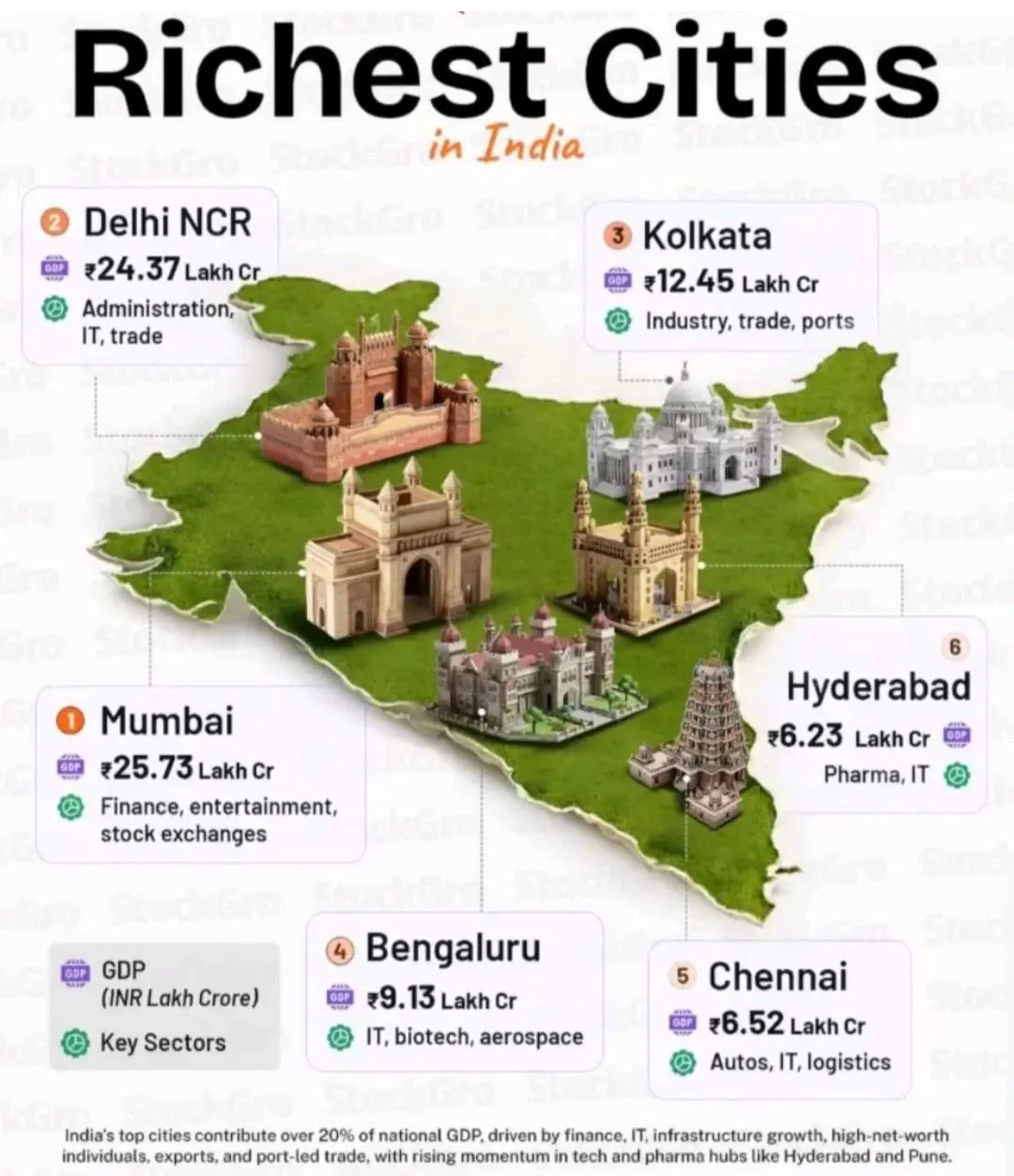
A recent report highlighting the Top 5 Richest Cities of India has sparked widespread debate across business and policy circles. One of the most discussed aspects of the ranking is the position of Kolkata as the 3rd richest city in the country, ahead of Bengaluru and Chennai.
While rankings often rely on numerical indicators such as GDP, understanding the deeper economic context requires examining historical evolution, structural strengths, and long-term economic patterns.
A Diversified Economic Foundation
Unlike technology-centric urban economies, Kolkata’s strength lies in diversification. Over decades, the city has built a balanced economic ecosystem driven by trade and logistics, manufacturing-based MSMEs, banking and financial services, real estate, education, healthcare, and a steadily growing IT & ITES sector.
In contrast, Bengaluru’s economy is heavily technology-driven. Although Bengaluru records higher per capita income, GDP rankings reflect overall economic output and scale rather than individual earnings alone. Additionally, cost of living plays a crucial role when evaluating overall economic well-being and quality of life.
Employment Scale and Consumption-Led Growth
One of Kolkata’s biggest advantages is its ability to generate employment across a wide spectrum of skills and industries. The city supports a large and diverse workforce not only from the Kolkata metropolitan region but also from eastern and north-eastern states.
This broad employment base strengthens consumption demand, turning Kolkata into a major consumption hub. Since Private Final Consumption Expenditure (PFCE) contributes more than 60% to India’s GDP, consumption-driven economies like Kolkata naturally experience faster aggregate GDP expansion.
Strategic Location and Logistics Advantage
Kolkata’s geographic positioning continues to be one of its strongest economic assets. The city has quietly evolved into a major logistics and trade gateway for eastern and north-eastern India, while also serving as a critical link connecting India with Southeast Asia.
Future infrastructure developments, including the India-Myanmar-Thailand Trilateral Highway, often referred to as the Kolkata–Bangkok Highway — are expected to further strengthen trade connectivity and economic activity in the region.
Revival of Port-Led Growth
The turnaround of Kolkata Port in recent years has significantly contributed to the city’s economic performance. From being a loss-making entity, Syama Prasad Mookerjee Port has transformed into a high-performing shipment hub, recording a net surplus exceeding ₹500 crore in FY 2024–25. This revival has reinforced Kolkata’s traditional strength as a trade and logistics centre.
Manufacturing MSMEs Driving Economic Output
Another major contributor to Kolkata’s GDP advantage is its strong manufacturing MSME ecosystem. The region hosts a large number of small and medium manufacturing enterprises, which typically generate higher revenue output compared to service-sector enterprises of similar scale.
This manufacturing depth provides stability and resilience to the city’s economic structure.
A Resilient Economy Built Over Centuries
Perhaps the most remarkable aspect of Kolkata’s economic story is its resilience. With a commercial legacy spanning nearly 350 years, the city continues to adapt and evolve while maintaining a diversified economic base.
As debates around rankings continue, Kolkata’s position highlights an important lesson, economic strength is not defined by a single sector but by diversification, workforce inclusion, and sustained consumption-driven growth.
Original Author: Soma Mitra Mukherjee
Designation: Assistant Director General, Head of Projects, The Bengal Chamber of Commerce and Industry
(This article has been suitably modified for the website without changing the context, tone, facts and opinions presented by the author in her original note.)