Kolkata's Yellow Taxi Gets an Electric Second Life - Meet the Startup Behind It
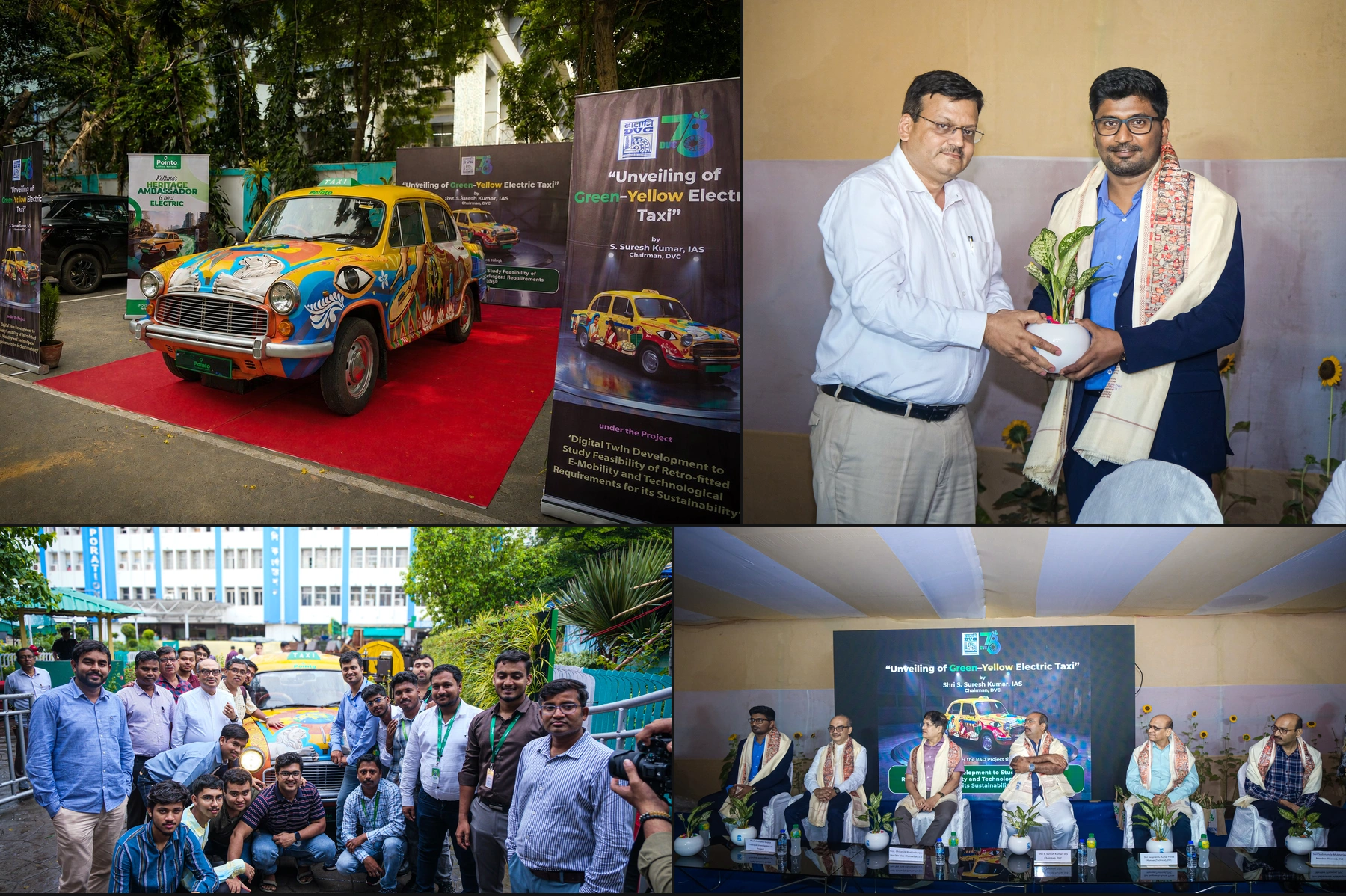
Earlier this week, Kolkata Calling shared the story of the city's iconic yellow Ambassador taxi being transformed into an electric vehicle. The response from our community was overwhelming, and for good reason.
This is not just a story about technology. It is a story about identity.
The Initiative
Jadavpur University's Department of Power Engineering, in collaboration with Damodar Valley Corporation (DVC), has developed a functional retrofit system that converts existing diesel Ambassador taxis into zero-emission electric vehicles. The prototype delivers an estimated 200 km range in city conditions, features IoT-enabled sensors, air conditioning, swappable battery architecture, and has been engineered keeping Indian ground realities, including waterlogging firmly in mind.
The estimated conversion cost sits at around ₹4-5 lakh, with a Battery-as-a-Service model being explored to further reduce the financial burden on drivers and fleet operators. JU aims to have a market-ready product with ADAS capabilities by the end of this year.
Meet Pointo
But behind this initiative is a name that deserves its own spotlight.
Pointo was founded in Barrackpore by IIT alumnus Riki Biswas, alongside co-founders Pratimendra Nath Bagui, Debmallya Marik, and Niranjan Bagui. What began as a local EV energy startup in Bengal has grown into a rapidly expanding enterprise headquartered in Bengaluru, now operating across seven states. Pointo's larger vision is straightforward but significant: making sustainable mobility accessible and practical across India.
In the electric yellow taxi initiative, Pointo is powering the battery-as a service-ecosystem, a critical piece of infrastructure that makes the Battery-as-a-Service model viable for everyday drivers.
More Than Electrification
For decades, Kolkata's yellow taxis have been woven into the fabric of the city. They have carried generations of Kolkatans through monsoons and milestones, rush hours and quiet nights. They are not just vehicles. They are memory.
What makes this initiative remarkable is its refusal to discard that memory. Instead of scrapping legacy vehicles in favour of new ones, this project asks a different question: what if we brought them forward?
A homegrown startup, a leading academic institution, and a public sector energy body are together answering that question — and the answer looks like a cleaner, smarter, electric Ambassador still navigating the streets of this city.
A Blueprint for India
The implications stretch beyond Kolkata. India has thousands of ageing diesel vehicles still in active use. A cost-effective, certified retrofit pathway — backed by battery-swapping infrastructure, could offer a scalable model for sustainable mobility across the country without the economic disruption of forced fleet replacement.
Kolkata, as it often does, may be quietly showing the way.
The yellow taxi has always carried the spirit of this city. Now, it carries something more: a glimpse of what thoughtful, inclusive, homegrown innovation looks like.
And a startup born in Barrackpore(Kolkata) is helping make it real.