Baranagar–Barrackpore Metro Project Gets Fresh Push After Nearly 16 Years
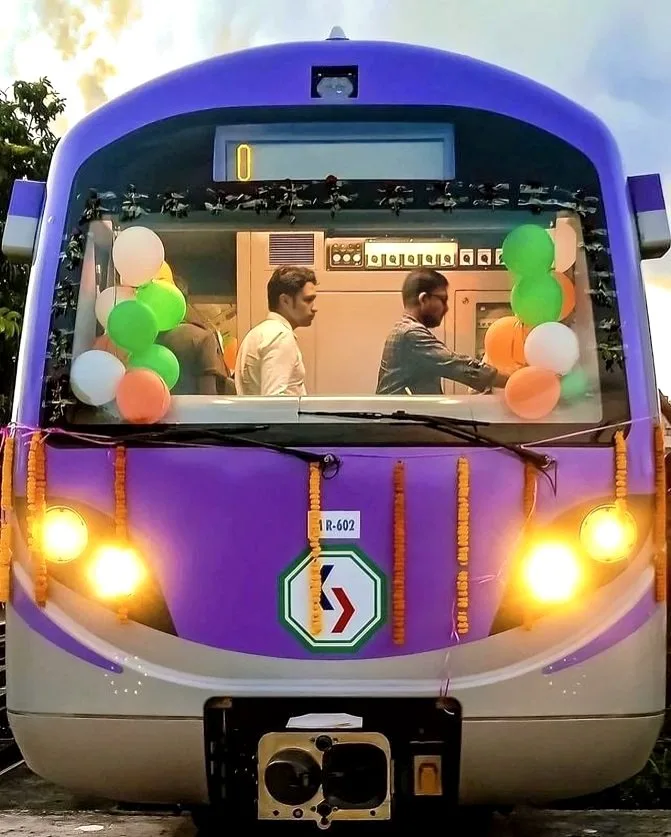
One of Kolkata’s longest-pending metro projects may finally be inching closer to reality.
The proposed Baranagar–Barrackpore Metro corridor, a 12.5-km stretch that has remained stalled for nearly 16 years, has received a fresh push after Rail Vikas Nigam Ltd (RVNL), the implementing agency for the project, held discussions with officials at the Kolkata Municipal Corporation (KMC) to resolve long-standing infrastructure hurdles.
The metro line, also known as the Pink Line, was originally sanctioned in 2010, when Mamata Banerjee was serving as Railway Minister. A Detailed Project Report (DPR) for the corridor was prepared in 2011, with the project expected to significantly improve connectivity along the busy BT Road corridor, linking Baranagar to Barrackpore.
However, despite initial plans, the project soon ran into a major obstacle.
Why Was The Project Delayed?
The biggest challenge has been the presence of critical underground water pipelines beneath BT Road.
According to reports, a KMC study conducted in 2011 identified major underground transmission pipelines, including 60-inch and 42-inch diameter lines, running beneath the proposed alignment. These pipelines play a crucial role in supplying water from the Palta Water Treatment Plant to the Tallah Reservoir, which serves large parts of North, Central, and even sections of South Kolkata.
While an agreement had previously been signed between the Railways and KMC to replace the pipelines with a larger 64-inch pipeline, the older pipelines were never dismantled, eventually pushing the project into a prolonged deadlock.
By 2014, concerns around shifting these essential utilities led to the project being placed on the back burner, despite remaining part of Union budget allocations with nominal funding over the years.
What Has Changed Now?
With renewed focus on infrastructure, fresh discussions have resumed between RVNL and KMC to find a workable solution.
Officials recently met to discuss how key water transmission lines could be shifted without disrupting the city’s water supply system. Since these pipelines are considered Kolkata’s lifeline, any relocation requires careful planning to avoid disruptions for lakhs of residents.
Metro Railway officials stated that different options have been discussed and will be reviewed further to arrive at a consensus in upcoming meetings.
Why This Metro Corridor Matters
If revived and completed, the Baranagar–Barrackpore Metro corridor could significantly improve connectivity for lakhs of daily commuters travelling between North Kolkata and surrounding suburban regions.
The project is expected to:
- Reduce travel time to central Kolkata
- Improve public transport connectivity along BT Road
- Ease congestion on one of the city’s busiest stretches
- Boost residential and commercial development in the region
For residents living along the BT Road belt, the metro line has long been viewed as a much-needed infrastructure upgrade.
After nearly 16 years of delays, renewed discussions have sparked fresh hope that one of Kolkata’s most awaited metro corridors could finally move forward.